Melas, Artists & Future
The troupes, the teachers and the fight to keep the lamp burning.
Even today, the flame of Yakshagana glows brightly. Between November and March, an estimated 5,000 to 6,000 performances take place along the coast, staged by legendary melas, sustained by temples, and carried forward by master artists and their students.
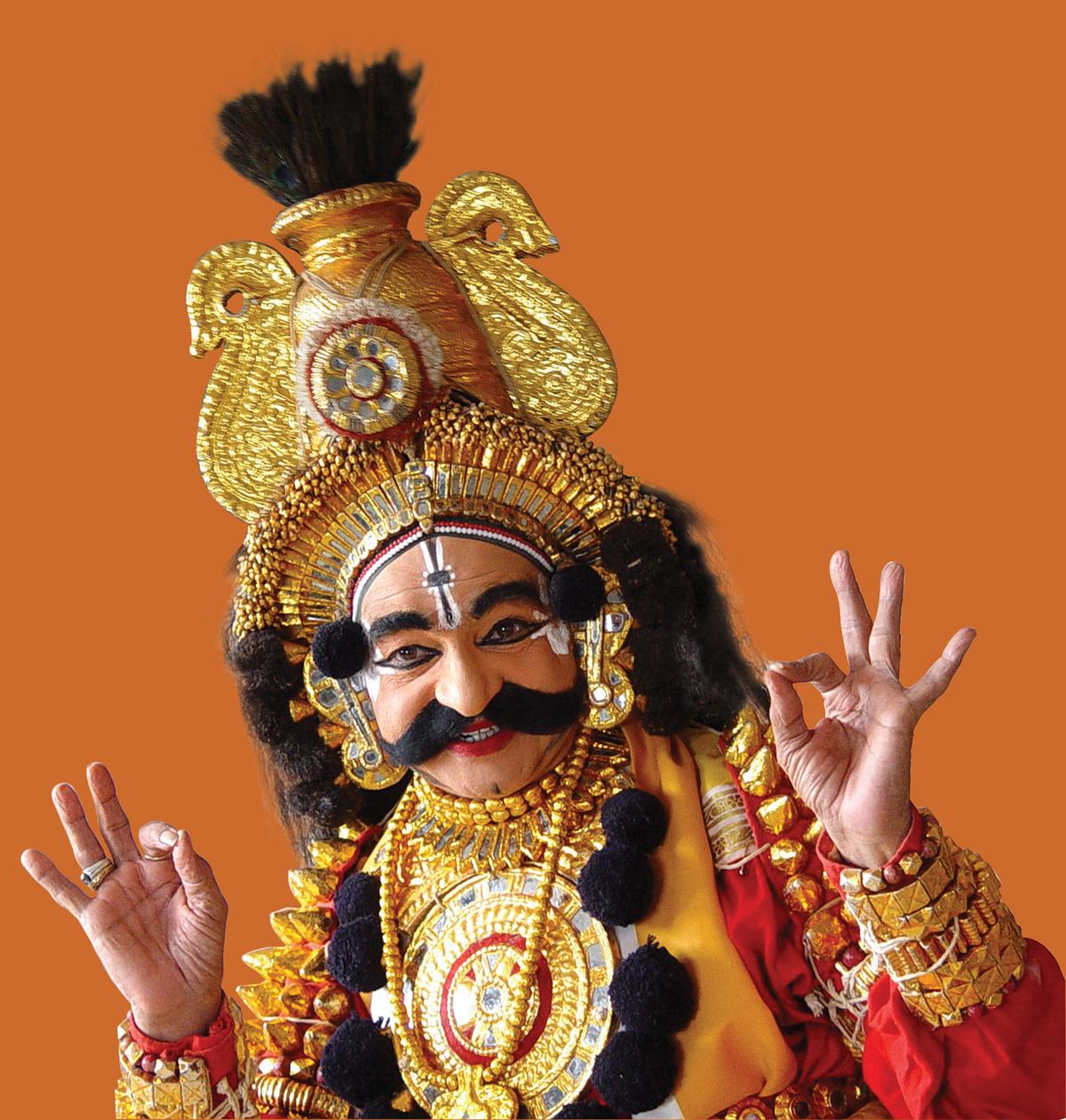 A master artist
Learning: the gurukula tradition
The Guru–Shishya (teacher–student) tradition is central to Yakshagana training. Because most melas are affiliated with temples, learning is imparted in gurukula style within temple residences, where students live and study the art full-time.
Udupi Yakshagana Kendra
The renowned Udupi Yakshagana Kendra was founded by the Jnanapeeth laureate Dr. K. Shivaram Karanth. Here, students from rural farming communities receive free, full-time training in the Badagutittu style. Its Yaksharanga troupe has performed traditional Yakshagana across India and abroad.
Shrimayya Yakshagana Kala Kendra
Founded in 1978 by Keremane Shambhu Hegde at Gunavante, Honnavar, this residential gurukula teaches the disciplines of Bhagavatike, dance, abhinaya and percussion. Students receive free food, lodging, formal schooling and education alongside the art.
Karnataka Yakshagana Academy
The Karnataka Yakshagana Academy plays a key supporting role, archiving traditions, collecting prasangas, and preserving the art digitally for future generations.
The great melas
The principal touring melas are legendary institutions, each drawing thousands as part of temple festivals.
| Mela | Style | Notes |
|---|---|---|
| Dharmasthala Yakshagana | Tenkutittu | Active from the 1950s; donation-funded, tied to the Dharmasthala temple. |
| Kateel Durgaparameshwari Mela | Tenkutittu | Sustained by contractual donations to Goddess Durgaparameshwari. |
| Idagunji Mahaganapathi Mela | Badagutittu | Established 1968; runs both free and ticketed performances. |
The art has even travelled overseas: international groups such as Yakshamithra (Toronto) and Yakshaloka (Boston) now keep the tradition alive among the diaspora.
Master artists
Among the senior traditional artists who have received national awards and recognition are:
- Keremane Shivarama Hegde, founder of the Idagunji Yakshagana Mandali.
- Chittani Ramachandra Hegde, of Mundagodu, a towering name of the Badagutittu stage.
- Naranappa Uppoor and Kalinga Navada, celebrated artists of the coastal tradition.
- Vidya Kalyure, who began staging "Yakshamanjushe" in Hindi in 2003, performing over 200 shows across North India to carry the art to new audiences.
Why it matters
Yakshagana holds a central place in coastal rural society's ceremonial life, serving as a communal festival. For audiences and performers alike it offers deep personal enrichment, and at a broader level it creates a liberating, festive atmosphere, like a village celebration or harvest festival. Religious institutions form the backbone of its sustenance: the temples at Dharmasthala, Kateel and Idagunji support their associated melas through patronage and donations.
Education · Protection · Propagation
The Keremane Idagunji Yakshagana Mandali, over a century old and listed on UNESCO's Representative List of Intangible Cultural Heritage, pursues these three principles through performance, gurukula education, workshops and its "Atave Paata" (Play is Learning) school programme.
Challenges & the road ahead
In the face of modern commercial and entertainment culture, many in the younger generation give less attention to Yakshagana's philosophical depth, and market-driven events risk diluting the form. Yet dedicated institutions continue to fight for it. The Karnataka Yakshagana Academy documents prasangas and digitises records, while the Keremane Idagunji Mandali safeguards the art from the pressures of demand-driven markets.
An artistic tradition is an ascending staircase of experience. Sustaining it is difficult without support from society and government, yet this legacy has taken firm steps toward renewal. It is essential that the lamp of Yakshagana continues to burn, never extinguished, reaching out to future generations as the closing raga of a pictorial, emotional drama.